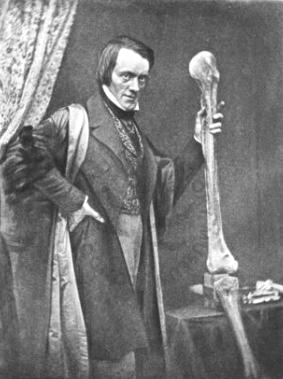
The first European discovery of this massive species was by W.B.D. Mantell at Awamoa, near Oamaru, and the bones were taken by him to England. A skeleton was built up of the bones of several individual birds and placed on view in the British Musem. This bird was described by Richard Owen as Dinornis elephantopus.
The Heavy–footed Moa was massive for its height, being the most thick set Moa. It was about 1.8 metres tall. Its short thick legs supported a body weighing as much as 145 kilograms.
The bills of Moa are adapted to cut twigs and leaves. The bills of anomalopertyx were better constructed for cutting and probably functioned like secaturs. They would have been able to give a nasty bite.
The bird was widespread in the South Island east of the Alps.
The Heavy-footed Moa, Pachyornis elephantopus, is a species of Moa from the Family Dinornithidae. This moa was widespread on the South Island only, and its habitat was the lowlands (shrublands, dunelands, grasslands, and forests).[2] It was a ratite and a member of the Struthioniformes Order. The Struthioniformes are flightless birds with a sternum without a keel. They also have a distinctive palate.
It had massive legs, and its large olfactory lobes suggest that it had a keen sense of smell. The heavy-footed moa lived in the forests and shrublands of the east coast of the South Island. Its remains have been found in middens on the Waitaki and Rakaia rivers.
Other common names: —
Dinornis elephantopus.
Description: —
Extinct bird
145 kilograms, 1.8 metres.
Poetry: —
No moa, no moa
In old Ao–tea–roa.
Can’t get ’em.
They’ve et ’em;
They’ve gone and there aint no moa!
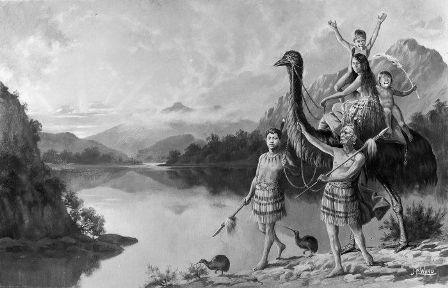
Illustration description: —
J.E. Ward, early 20th century, photo of oil painting, National Library.
Reference(s): —
Oliver, W.R.B. New Zealand Birds, 1955.
Worthy, Trevor H., & Holdaway, Richard N., The Lost World of the Moa, 2002.
Page date & version: —
Tuesday, 27 May 2014; ver2009v1