
New
Zealand
Birds
New Zealand Birds’
(The Greytown Gallery)
65 Wood Street
Post Office Box 146
Greytown, 5742
Wairarapa
New Zealand
Mobile: +64 (0)27 508 5078
[email protected]
Historical fantasy
Available from Amazon
Te Tini o Toi, The Children of Toi, (book one), by Narena Olliver
Monck’s cave
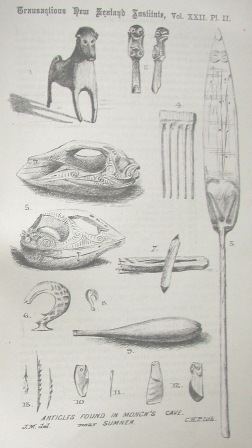
Major Mair, in an interesting paper on the disappearance of the Moa in Volume 22, Transactions of the NZ Institute, makes the statement that he is a supporter of the belief that Maori never had any personal knowledge of the Moa (based on the lack of reference to Moa in the oral tradtions of North Island Maori). The following short argument... may be found not to be too trivial to be considered and refuted, if found wanting, by Major Mair.
Last year I had the satisfaction of making a very complete exploration of a recently discovered cave on the property of Mr Monck, near Sumner. The facts are these: the cave has been closed since before the advent of Europeans to Canterbury. The condition of the cave on entry gave all the appearance of having been untouched since the last dwellers in it left it. Its entrance was covered over by a very extensive land-slip, which evidently fell during their absence, as no human bones were discovered in it. Quarrying operations have been carried on amid the material of this landslip between twenty and thirty years. These operations, on reaching last year the live rock of the hills, disclosed an aperature through which a lad squeezed himself into the cave. On its floor were found implements in wood and in greenstone, half-burned pieces of timber, and fire-making apparatus, so lying as to give the impression that when its occupiers left they intended to return. The greenstone objects were beautifully made, while the implements of wood, such as the canoe bailer and the fragment of the paddle handle, exhibit ornamentation charateristic of Maori. On the floor of the cave were found also numerous largish fragments of Moa bones, partly burned and partly broken, scattered round the last fireplace, or found on the floor of the inner caves. In the kitchen midden in front of the cave were found many fish hooks and barbed spear tips made of bone from the same birds. On the surface were picked up several bones of more than one individual species of swan. Just below the surface of an untouched midden I myself picked out pieces of Moa egg shell, each with its internal epidermis perfectly preserved. The question before stands thus: the moa egg shells, being among the refuse of the feasts of the quite recent occupants of the cave, are the remains, it is legitimate to argue, of eggs they had eaten.
In the other Sumner caves the remains of Moa eggs were abundant in the kitchen middens and were found in such positions as to suggest that they had been used for food. The black swan was introduced into New Zealand from Australia a number of years after the settlement of Canterbury. The bones of the swans found in the Sumner cave were also left there by the feasters who ate the Moa eggs, and they too were therefore contemperaneous with the Moa. The figure of a dog carved out of wood was also found in the cave. The Maori dog must therefore have been contemperaneous with the Moa.
Other common names: —
kuranuni, manu-whakatau.
Description: —
Extinct bird
Poetry: —
Tenei, E tama! Te whakarongo ake nei ki te hau mai o te korero,
Na Tu-wahi-awa te manu-whakatau i mau mai i runga i a Tokomaru
Parea ake ki muri i a koe, he atua korero ahiahi.
Kotahi tonu, E tama! Te tiaki whenua, ko te kura-nui,
Te manu a Rua-kapanga, i tahuna e to tipuna, e Tamatea,
Ki te ahi tawhito, ki te ahi tipuna, ki te ahi na Mahuika,
Na Maui i whakaputa ki te ao;
Ka mate i whare huhi o Reporoa, te rere to momo
E tama - e - i!
Listen, my son, for I hear rumours spoken
That the manu-whakatau was brought here
By Tu-wahi-awa on the Tokomaru canoe.
Reject this story as an idle tale.
One guardian only, O son, had this land,
The Kura-nui, the bird of Rua-kapanga.
Destroyed by your ancestor, by Tamatea, with subterranean and supernatural fire,
The fire of Mahuika, brought to this world by Maui.
Thus were they driven to the swamps and perished;
Thus was the species lost, O son
— Transactions of the NZ Institute, Volume 48, 1916
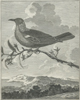
Illustration description: —
Transactions of the NZ Institute, Volume 23, 1890.
Chris Gibbins’
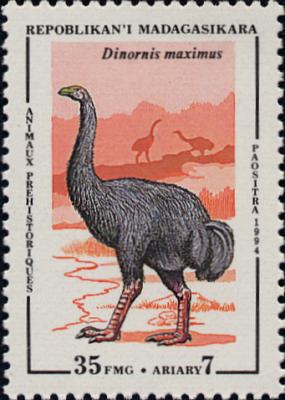
Birds of the World on Postage Stamps
Reference(s): —
Transactions of the NZ Institute, Volume 23, 1890.
Page date & version: —
Tuesday, 16 July 2019; ver2009v1